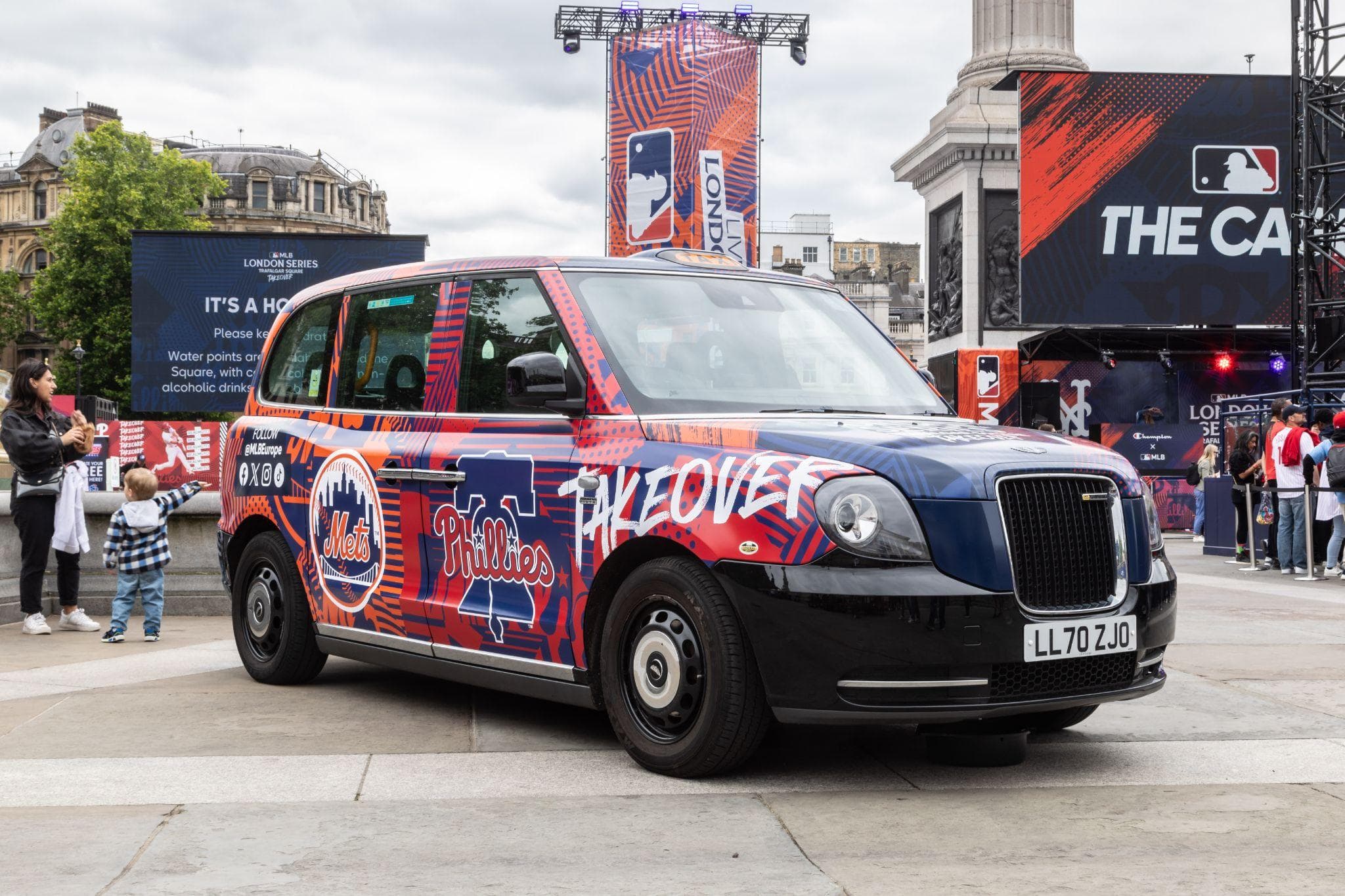
Taxi Advertising Formats
Two formats, two black cab fleets, four campaign options. This page is about working out which of them your budget should buy.
Two formats, and one real decision.
Every taxi advertising campaign comes down to the same trade-off: more vehicles, or more of each vehicle. Taxi Supersides take both flanks of the cab at a lower rate per vehicle, so a budget buys a larger fleet. Taxi Full Wraps take the whole exterior, so a budget buys fewer vehicles that are impossible to ignore.
Neither is better. They solve different problems, and the wrong one is usually chosen because someone compared the rate per cab instead of comparing what a fixed budget actually buys in each format.
Both formats run on both London fleets — the Premium Black Cab and the Classic Black Cab — and both include interior Tip Seat advertising at no additional cost. So the fleet and the interior are not part of the decision. The format is.
| Question | Choose Taxi Supersides | Choose Taxi Full Wraps |
|---|---|---|
| What is the campaign trying to do? | Build awareness steadily across a city, and stay in front of people for months. | Land a moment — a launch, a market entry, something worth photographing. |
| What does the creative look like? | A name, a proposition, a call to action. Type-led and read in two seconds. | An image, a colour, a world. Art-directed to the shape of the vehicle. |
| How is the budget best spent? | On more vehicles, so the same audience meets the campaign repeatedly. | On more presence per vehicle, so each one is impossible to ignore. |
| Where does the audience sit? | Spread across a city, or reachable through sheer repetition. | Reachable by a small fleet that is impossible to ignore. |
Taxi Supersides
A taxi superside is a large printed panel fitted along the side of a licensed black cab, below the window line and running most of the length of the vehicle. Campaigns take both flanks as standard, so every cab carries the message on its left and its right. You will also hear them called taxi side panels; they are the same thing.
Brands choose Supersides when they want presence across a whole city rather than standout on a single vehicle. Because the rate per cab is lower than a Full Wrap, the same budget buys a larger fleet, and a larger fleet is what produces frequency: the same commuters seeing the same message on different cabs, in different streets, on different days.
Taxi Supersides in fullFrequency, not just reach
One striking vehicle is seen once. A fleet is seen repeatedly, by the same people, in different parts of their day — which is what actually moves recall. Supersides are the format that lets a budget buy enough vehicles for that to happen.
More cabs for the money
The lower rate per cab is the point rather than a compromise. Where a Full Wrap budget buys a small fleet with enormous presence each, the same money in Supersides puts noticeably more vehicles into circulation.
A clean single message
The panel is a defined rectangle at street level, which suits a name, a proposition and a call to action. Creative that has to be understood in two seconds is easier to get right here than across a whole vehicle body.
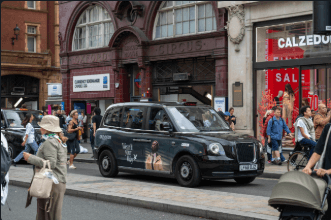
Premium Black Cab Supersides
Bold side panels on London's newest electric cabs. Broad reach across the West End and the City, with the added benefit of a modern, quieter fleet.
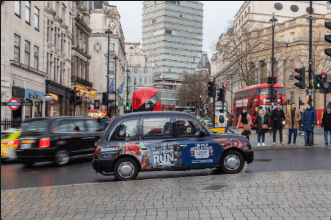
Classic Black Cab Supersides
Large side panels on the cab everyone pictures when they picture London — the most recognised taxi advertising format in the country.
Taxi Full Wraps
A taxi full wrap covers the entire exterior of a licensed black cab in printed vinyl — bonnet, doors, flanks and rear. The silhouette stays exactly as it was; everything else becomes yours. The format is also sold across the industry as a taxi full livery, and you will hear both names used for the same thing.
Because the whole body carries the creative, a wrap can do things a panel cannot: hold a full brand world, carry an image rather than a line, and transform a vehicle everyone already recognises. That combination is why wrapped cabs get photographed and shared, and why they work for high-profile launches and experiential moments.
Taxi Full Wraps in fullStandout that gets photographed
A wrapped cab is an event on the street. People photograph it, colleagues send it to each other, and the campaign ends up in places you did not buy — which is the part of the value that never appears on the rate card.
Creative freedom the panel cannot offer
The whole body is the canvas, so the idea can be an image, a colour, a texture or a transformation rather than a line of type in a rectangle.
Presence out of proportion to fleet size
A small number of wrapped vehicles reads as a campaign several times its actual size, because each one is an event on the street. Impact per vehicle does the work that volume does for Supersides.
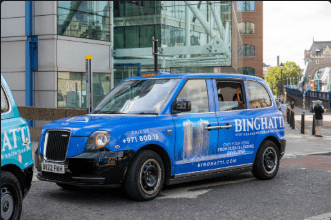
Premium Black Cab Full Wrap
A full wrap on an electric cab, turning the whole vehicle into a moving brand asset with a modern fleet story attached.
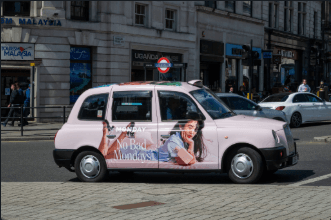
Classic Black Cab Full Wrap
A full wrap on the traditional London taxi. High reach, instant recognition, and the silhouette that says London before a word is read.
Supersides and Full Wraps compared.
The same campaign, costed both ways, is usually the fastest route to a decision. Ask us for both and compare what each buys against your actual budget.
| Feature | Taxi Supersides | Taxi Full Wraps |
|---|---|---|
| Coverage of vehicle | Both side panels, below the window line | Full exterior — bonnet, doors, flanks and rear |
| Visual impact | High — read at street level from both sides | Highest — the whole vehicle carries the creative |
| Relative cost per cab | Lower, so the same budget buys a larger fleet | Higher, reflecting the material and fitting involved |
| Creative possibilities | One strong message per panel | Full brand storytelling across the body |
| Typical campaign scale | Larger fleets, built for reach and frequency | Smaller fleets, built for standout and PR value |
| Best suited to | Always-on awareness, retail and services | Launches, hero moments and experiential |
| Tip Seat advertising | Included at no additional cost | Included at no additional cost |
Not sure which way to go? Tell us the objective and the budget and we will cost both, so the trade-off is in real numbers rather than in the abstract.
Get Prices & AvailabilityPremium or Classic: choosing your black cab fleet.
A second, smaller decision. Both formats run on either fleet, so this one is about what you want the vehicle itself to say — and how many interior panels the campaign gets.
Premium Black Cab
London's latest-generation electric black cab
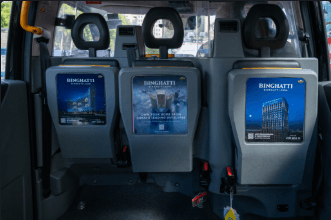
London's latest-generation electric taxi. A modern, quieter, cleaner vehicle that places a brand in a premium environment, and the fleet most often seen around new-build offices in the City and Canary Wharf. It is also the roomier interior of the two, which is why it carries three tip seat panels rather than two.
Industry model: TXE
Premium Black Cab advertisingClassic Black Cab
The iconic traditional London black cab
The instantly recognisable traditional London taxi, and one of the most established advertising environments in the city. When a photograph of your campaign needs to say London at a glance, this is the cab that does it. Two tip seat panels sit inside the passenger compartment.
Industry model: TX
Classic Black Cab advertising| Feature | Premium Black Cab | Classic Black Cab |
|---|---|---|
| Vehicle | London's latest-generation electric black cab | The traditional London black cab |
| Interior tip seat panels | Three per cab | Two per cab |
| Formats available | Supersides and Full Wraps | Supersides and Full Wraps |
| Reads as | Modern, low-emission, premium | Iconic, established, unmistakably London |
| Often chosen for | Brands with a sustainability or innovation story | Brands that want the classic London silhouette |
Campaigns are not limited to one fleet. Running a mix is common where a brand wants both the modern fleet association and the classic London silhouette.
Your campaign doesn’t stop outside the cab.
Every Superside and Full Wrap campaign includes interior Tip Seat advertising at no additional cost, giving your brand additional visibility to passengers during their journey.
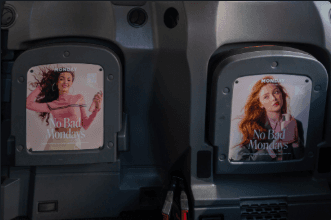
The exterior creates the reach. The interior does something different: it puts your message in front of a seated passenger with time on their hands, in the most captive environment outdoor advertising has. Premium Black Cabs carry three tip seat panels and Classic Black Cabs carry two, so the fleet you choose changes how much interior inventory the campaign gets.
How a taxi advertising campaign works.
Four steps from first email to cabs on the road. Planning, artwork, print, fitting and reporting are handled by one team.
The full guideTell us your campaign objectives
Audience, city, dates and budget. No brief is too rough — a target and a month is enough to start.
Choose your format and fleet
Supersides or Full Wraps, on Premium or Classic black cabs. We recommend the mix and confirm what is available.
We handle production and installation
Artwork adaptation, print on approved materials and fitting at approved depots, so drivers lose no shift time.
Your taxis hit the streets
Your advertising goes out with the working London fleet and starts being seen across the city, for the length of the booking.
Both formats, both fleets.
Superside and Full Wrap campaigns photographed on London streets, shown as illustrations of each format. Client names and results appear only where a campaign has been published with the advertiser's agreement.
Choosing a format, answered.
Which taxi advertising format should I choose?
Start from the objective rather than the rate. If you need to be seen often by a broad audience across a whole city, Supersides put more cabs on the road for the same budget and build frequency faster. If you need one campaign to be unmissable and worth photographing, a Full Wrap on a smaller fleet does that. If your creative is a name and a proposition, Supersides carry it cleanly; if it is an image or a full brand world, a wrap gives it room.
Can one campaign use both formats?
Yes, and it is a common shape for a launch. A small number of Full Wraps carry the standout and give you the photography you will use everywhere else, while a larger Superside fleet carries the reach behind it. Both parts are planned, fitted and reported as one campaign, so it adds nothing to manage on your side.
What is the difference between Premium and Classic Black Cabs?
The Premium Black Cab is London's latest-generation electric taxi — a newer, quieter vehicle with a roomier interior that carries three tip seat panels. The Classic Black Cab is the traditional London taxi, the silhouette that reads as London in a photograph anywhere in the world, and it carries two tip seat panels. Both formats run on both fleets, and a campaign can use either or a mix.
What is a taxi full livery?
Full livery is the industry term for what we sell as a Taxi Full Wrap: the entire exterior of the cab covered in printed vinyl. The two names describe the same product, and you will hear both used in the market.
Is Tip Seat advertising available on its own?
No. Tip Seat advertising is not sold as a standalone format and has no separate rate. It is included at no additional cost with every Superside and Full Wrap campaign, so the only way to get it is to run one of the two exterior formats.
Are there restrictions on what a taxi advert can show?
Yes. Licensed vehicles are subject to their licensing conditions and to the standard UK advertising codes, and some categories are restricted. Two rules catch designers out most often: exterior advertising must carry the same creative on both sides of the vehicle, and QR codes are not permitted on the exterior. We check creative against the applicable rules before anything goes to print, and we will flag a problem early rather than at the proofing stage.
Can we run different creative on each side of the taxi?
No. Exterior advertising must carry the same creative on both sides of the vehicle. The design can be flipped or mirrored so it reads correctly on the opposite flank, but the two sides cannot carry different messages, so plan one execution rather than a pair. Interior tip seat panels are more flexible — on the Classic Black Cab the left and right panels may carry different designs.
Can we put a QR code on a taxi advert?
Not on the exterior. QR codes are not permitted on the outside of London taxis. They work well on the interior tip seat panels, which are included with every campaign: a seated passenger holding a phone is a far better setting for a scannable code than a vehicle seen briefly from the pavement.
What artwork do you need, and in what format?
You build your creative onto the production template for your chosen format and cab type. We supply it, and it already carries the vehicle geometry, production panels, door splits and cut-outs, so nobody needs to measure a vehicle. Finished files are supplied as PDFs following the specification on the template you used, and we proof everything before print. All six templates are downloadable from the Artwork & Creative Guide.
Do you handle printing and installation?
Yes. We adapt your artwork to the fleet templates, proof it with you, print it on materials approved for licensed vehicles and fit the cabs at approved depots. Fitting is scheduled around driver shifts. You supply the creative and we handle everything after it, including removal at the end of the campaign.
How long does it take to get a campaign on the road?
The timeline is driven by three things: how quickly artwork is approved, print and fitting capacity, and fleet availability for the dates you want. A campaign tied to a fixed launch date needs more lead time than an always-on run that can start when the cabs are ready. Bring dates to the first conversation and we will tell you what is realistic rather than what is optimistic.
Go deeper
Planning a taxi advertising campaign?
Tell us the city, the format you are considering, your budget and your dates. You will get formats, fleet availability and an indicative rate — from a person, not a portal.